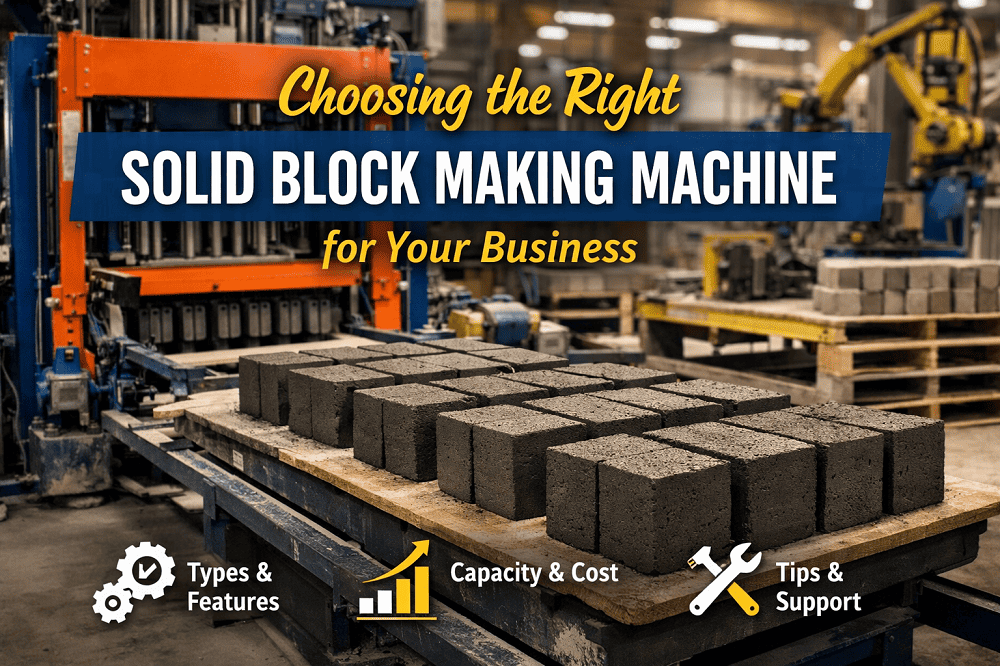
The construction industry depends on strong and reliable blocks. These blocks form the base of homes, offices, and industrial buildings. To meet growing demand, many businesses invest in a Solid Block Making Machine. Choosing the right machine is not an easy task. There are many options available. Each machine serves a different purpose.
The right choice can improve output and reduce costs. The wrong choice can slow production and increase expenses. This guide will help you understand how to choose the best Solid Block Making Machine for your business needs.
Understanding What a Solid Block Making Machine Is
A Solid Block Making Machine is used to produce solid concrete blocks. These blocks are strong and durable. They are commonly used in load-bearing walls and foundations.
The machine mixes raw materials like cement, sand, and aggregates. It then compresses the mix into solid blocks. Some machines work manually. Others are semi-automatic or fully automatic.
Knowing how these machines work helps you make a better buying decision.
Why Your Business Needs the Right Machine
Every business has different production goals. Some focus on small projects. Others handle large construction contracts. The type of Solid Block Making Machine you choose should match your workload.
A suitable machine offers steady production. It also reduces labor effort. It ensures block quality stays consistent. Over time, this improves customer trust and profit margins.
Types of Solid Block Making Machines
Manual Solid Block Making Machine
Manual machines require human effort. Workers operate levers and molds by hand. These machines are affordable. They are suitable for small businesses or startups.
However, production speed is slow. Output depends heavily on labor skill.
Semi-Automatic Solid Block Making Machine
Semi-automatic machines combine manual work with automation. Mixing and molding are often automated. Block removal may still need workers.
These machines offer better output. They also reduce labor fatigue. They are a good option for medium-scale businesses.
Fully Automatic Solid Block Making Machine
Fully automatic machines handle the entire process. Mixing, molding, pressing, and stacking are automated. These machines produce large volumes in less time.
They cost more initially. However, they reduce labor costs in the long run. They are ideal for large manufacturing units.
Key Factors to Consider Before Buying
Production Capacity
Production capacity is the first thing to consider. Ask yourself how many blocks you need daily. Choose a Solid Block Making Machine that can meet this demand.
Buying a low-capacity machine can slow growth. Buying a very large machine may waste money if demand is low.
Block Size and Design
Different projects require different block sizes. Some machines support multiple mold types. This adds flexibility to your business.
Check if the machine allows easy mold changes. This feature helps you serve more customers.
Quality of Raw Materials
Some machines work better with certain material mixes. Ensure the Solid Block Making Machine can handle local raw materials. Poor compatibility can affect block strength.
Ask the supplier about material requirements before purchasing.
Power Consumption
Power usage affects operating costs. Automatic machines use more electricity. Manual machines use less power but need more labor.
Choose a machine that balances power use and output efficiency.
Budget and Cost Considerations
The price of a Solid Block Making Machine varies widely. Manual machines are low-cost. Automatic machines are expensive.
Do not focus only on the purchase price. Consider long-term costs. These include maintenance, labor, power, and spare parts.
Sometimes a higher upfront cost leads to better profits over time.
Space and Location Requirements
Machine size matters. Some machines need large factory space. Others fit into smaller workshops.
Check the available area at your site. Also consider space for raw materials and finished blocks.
Good layout improves workflow. It also increases safety.
Ease of Operation and Training
A complex machine needs skilled operators. Training takes time and money. Choose a Solid Block Making Machine that is easy to operate.
Modern machines often include control panels. Clear instructions help reduce errors.
Ask the supplier if training support is provided.
Maintenance and Spare Parts
Regular maintenance keeps the machine running smoothly. Poor maintenance leads to breakdowns and delays.
Choose a machine with easily available spare parts. This reduces downtime.
Also check if local technicians can service the machine.
Supplier Reputation and Support
A reliable supplier is as important as the machine itself. Look for suppliers with good reviews. Check their experience in the industry.
After-sales support matters a lot. Good suppliers offer installation help and technical support.
This support ensures your Solid Block Making Machine works properly from day one.
Safety Features
Safety should never be ignored. Machines should have emergency stop buttons. Guards should cover moving parts.
Safe machines protect workers. They also reduce accident-related costs.
Always ask about safety standards before buying.
Future Business Growth
Think about future expansion. Your business may grow faster than expected. A machine that supports upgrades is a smart choice.
Some machines allow added molds or automation features later. This saves money in the long term.
Common Mistakes to Avoid
Many buyers choose machines based only on price. This often leads to problems later.
Others ignore maintenance needs. Some fail to check production capacity.
Avoid rushing the decision. Compare options carefully.
Conclusion
Choosing the right Solid Block Making Machine is a crucial business decision. The right machine boosts production and quality. It also improves profits and customer satisfaction.
Consider your production needs, budget, and space. Evaluate machine types and supplier support. Think about future growth.
With careful planning, your investment will pay off for years to come.